.png)
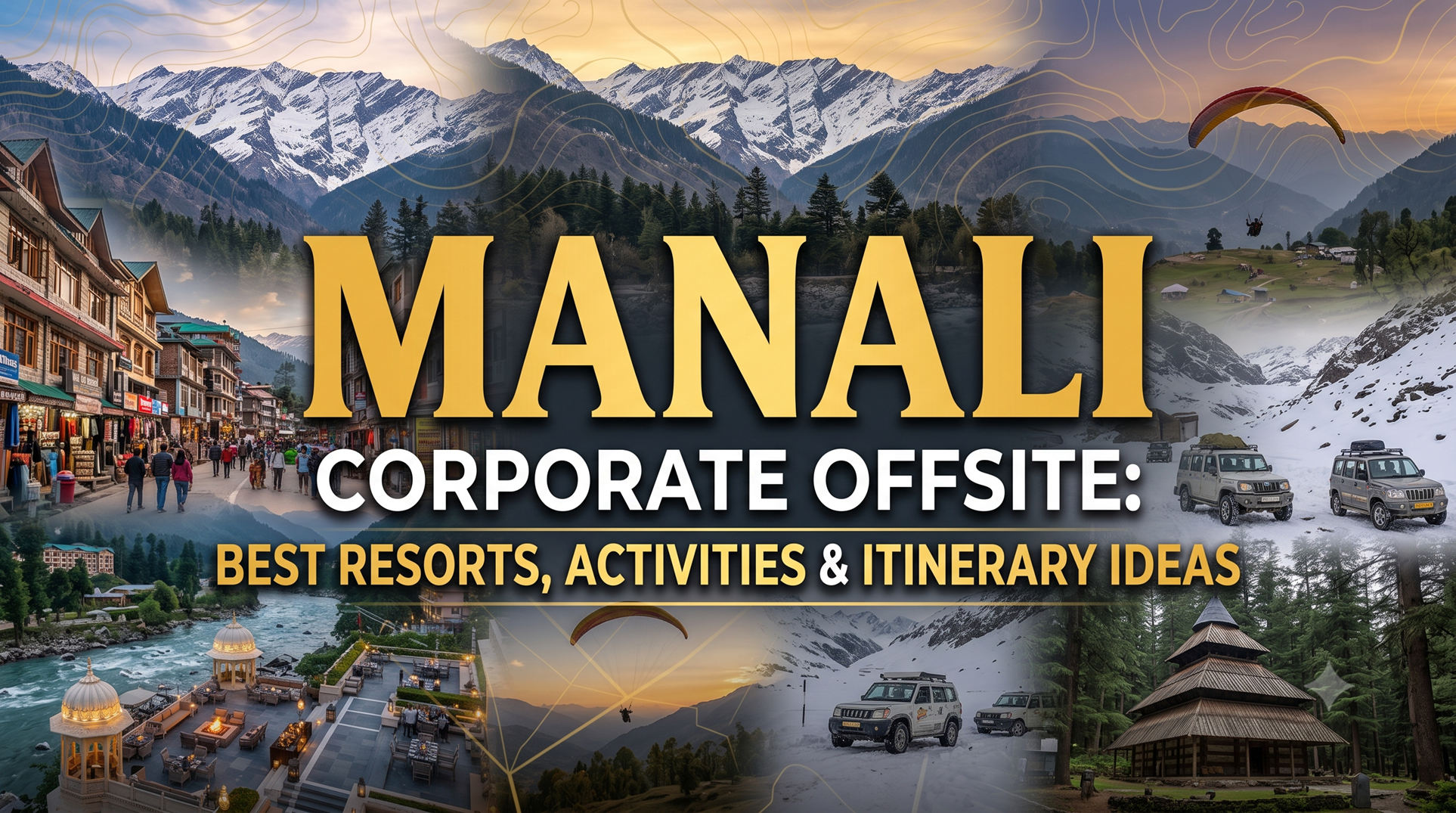
Manali Corporate Offsite: Best Resorts, Activities & Itinerary Ideas
There is an unmistakable shift in perspective when your team leaves the plains behind and enters the upper reaches of the Kullu Valley. As the Beas River cuts through towering granite gorges flanked by deodar forests and snowcapped Pir Panjal peaks, the daily mental clutter of back-to-back video calls and endless spreadsheets naturally begins to clear.
For organizations looking to bring distributed teams together or realign leadership behind bold annual milestones, a corporate offsite Manali provides an inspiring natural backdrop. It combines crisp mountain air and sweeping Himalayan views with an expanding network of upscale resorts equipped with heated conference halls, high-speed fiber connectivity, and professional event infrastructure.
However, executing a corporate retreat at 6,700 feet requires more than selecting a scenic property. Mountain highway transit logistics, seasonal weather swings, pass permits, and altitude-conscious pacing demand practical, detailed coordination.
Whether you are hosting an intimate 15-person founders' strategy council or coordinating a 150-person cross-functional summit, here is your complete blueprint for planning a seamless offsite in Manali.
Why Manali Delivers Distinct Strategic Value
A corporate offsite should never feel like ordinary office work transported to an uninspired hotel. The objective is to shift the cognitive environment so teams can communicate with transparency and build genuine trust. Manali excels as a corporate destination for several key reasons:
- Inspiring Cognitive Shift: Stepping into an alpine landscape changes how people think. Away from metropolitan heat and noise, the brain shifts out of defensive, transactional modes into reflective, long-range strategic thinking.
- Modern MICE Infrastructure: Over the past few years, the hospitality corridor between Kullu, Naggar, and Manali has matured significantly. Leading brands and boutique estates now feature temperature-controlled conference ballrooms, outdoor banquet lawns, and enterprise internet connections.
- All-Weather North Portal Access: The engineering milestone of the Atal Tunnel has transformed the regional logistics landscape. Teams can now transition from the lush green orchards of the Kullu Valley into the dramatic, high-altitude lunar landscapes of Lahaul within 45 minutes, creating extraordinary opportunities for unforgettable team experiences.
- Versatile Travel Options: Groups can fly directly into Bhuntar Airport (Kullu–Manali Airport), connect via high-frequency flights into Chandigarh followed by a smooth highway transit, or arrange luxury Volvo sleeper coach charters directly from Delhi-NCR.
Choosing Your Base: The 4 Key Hospitality Corridors
Manali is not a single, uniform pocket. The greater valley comprises distinct micro-zones, each offering different transit times, noise levels, property formats, and meeting capabilities. Picking the right corridor is your most important planning step.
1. The Heritage & Orchard Belt (Naggar to Raison)
Situated 15 to 25 kilometers south of main Manali town along the left and right banks of the Beas, this belt is characterized by expansive apple orchards, pine forests, and quiet Himachali villages.
- The Vibe: Peaceful, historic, elegant, and unhurried.
- Top Properties: Baragarh Resort & Spa (IHCL SeleQtions), Span Resort & Spa, and boutique orchard estates.
- Best Suited For: CXO roundtables, executive leadership retreats, founders' councils, and strategic offsites (15 to 70 attendees).
- The Logistical Reality: This corridor bypasses the heavy tourist congestion of central Manali entirely. It is located closer to Bhuntar Airport, cutting transit time down to 45–60 minutes. The wide valley floor provides ample space for private lawns and outdoor workshops without noise pollution.
2. The Upper Valley Corridor (Bahang, Nehru Kund & Palchan)
Located 4 to 10 kilometers north of Manali on the road leading toward Solang Valley and the Atal Tunnel.
- The Vibe: Alpine, dramatic, scenic, and adventure-focused.
- Top Properties: The Allure Grand Resort, Solang Valley Resort, and luxury riverside chalets.
- Best Suited For: Fast-moving tech teams, product design squads, and cross-functional groups wanting immediate access to adventure sports, snow activities, and river trails (40 to 120 attendees).
- The Logistical Reality: Excellent proximity to Solang Valley and Lahaul. The approach roads are modern and easily accommodate mini-coaches. However, during peak tourist seasons (May–June and late December), traffic heading toward Solang can cause delays, requiring well-buffered transit schedules.
3. Simsa & Rangri (The Accessible Valley Slopes)
Positioned just south of the central town, perched on terraced slopes overlooking the river basin.
- The Vibe: Convenient, panoramic, and balanced.
- Top Properties: Rohtang Heights Resort, Manuallaya (The Resort Spa in the Himalayas), and Apple Country Resorts.
- Best Suited For: Large-scale annual kick-offs, sales conferences, and all-hands retreats (80 to 200+ attendees).
- The Logistical Reality: These properties offer substantial room inventory and large convention halls. They sit close enough to Mall Road for colleagues who want an evening walk through the markets, but stay elevated enough to avoid the noise of the town center.
4. Old Manali & Log Huts Area
Perched on the upper wooded hills above the Manaslu River, surrounded by cedar groves.
- The Vibe: Bohemian, creative, youthful, and walkable.
- Top Properties: Boutique heritage cottages, design homestays, and boutique hotels.
- Best Suited For: Creative agencies, marketing offsites, and early-stage startup cohorts (10 to 30 attendees).
- The Logistical Reality: Approach roads are steep and narrow. Large coaches cannot navigate these lanes; transfers require fleets of local 4x4 cabs or small utility vehicles. Properties here focus on character and cozy intimacy rather than sprawling convention halls.
Handpicked Resorts for Corporate Groups
Selecting the right mountain property requires balancing comfortable guest room blocks with reliable meeting facilities, heating systems, and outdoor event spaces. Here are vetted venues across primary corporate categories:
For Ultra-Luxury Strategic Summits & CXO Councils (15–50 Pax)
- Baragarh Resort & Spa, Manali – IHCL SeleQtions (Naggar): Nestled amid manicured apple orchards with panoramic views of the Dhauladhar range, Baragarh sets an upscale standard in the valley. It features well-equipped indoor conference spaces (such as the Indrasan meeting room), the scenic Tentu alfresco terrace, and the expansive Bageecha lawns. Its refined dining, spa facilities, and attentive service make it an exceptional choice for confidential leadership retreats.
- Span Resort & Spa (Baragran / Katrain): One of the valley’s oldest luxury riverside properties, Span spans acres of landscaped lawns beside the rushing Beas River. Featuring Helipad access, stone cottages, walnut wood interiors, and private riverside walking paths, it offers a secluded setting for high-stakes strategic debates and executive rejuvenation.
For Large Summits, Annual Kick-Offs & All-Hands (80–200+ Pax)
- Manuallaya – The Resort Spa in the Himalayas (Sunny Side): Set across terraced hillside gardens, Manuallaya provides extensive room inventory and versatile banquet halls that seat large groups in theater or cluster arrangements. With indoor heated pool amenities, multi-cuisine restaurants, and landscaped decks, it comfortably handles complex multi-day corporate conferences.
- The Allure Grand Resort (Bahang): Positioned along the riverbank on the road toward Solang, this property pairs spacious riverside rooms with modern convention infrastructure. Its pillarless banquet hall handles corporate sessions smoothly, while riverside lawns provide a stunning venue for evening sundowners and team galas.
- Rohtang Heights Resort & Spa (Rangri): Featuring dedicated corporate conference facilities capable of hosting up to 200 participants, Rohtang Heights offers modern business technology, mountain-facing rooms, and dependable catering backed by experienced event operations.
For Boutique Experiential Offsites (20–50 Pax)
- Solang Valley Resort: Located directly on the banks of the Beas at the foot of the Solang slopes, this property is ideal for teams seeking active outdoor team-building. It offers private river frontage, dedicated workshop spaces, and immediate access to adventure activities.
- Larisa Resort (Haripur): An eco-luxury resort set within lush orchards, Larisa features stone-and-wood cottages, farm-to-table dining, and a tranquil ambiance. It is well-suited for product design sprints, writing retreats, and mindfulness-oriented leadership workshops.
5 Meaningful Team Activities That Avoid "Forced Fun"
High-performing teams resist generic party games and awkward icebreakers. Manali offers an alpine playground for activities that foster natural collaboration, shared challenge, and genuine bonding.
1. The Lahaul & Atal Tunnel High-Altitude Expedition
Take your team through the 9.02-kilometer engineering marvel of the Atal Tunnel. As you emerge on the northern portal, the lush green valley gives way to the stark, snow-dusted peaks and glacial rivers of Sissu in Lahaul.
- Corporate Experience: Split the team into cohorts for a guided walk to the frozen Sissu waterfall, followed by an open-air team challenge on the valley floor. Conclude with a warm Himalayan lunch featuring hot thukpa, regional momos, and spiced herbal teas.
- Corporate Value: Shared wonder and sensory reset. Experiencing this dramatic geographical transition together creates lasting shared memories that bond teams across titles.
2. Collaborative White-Water Rafting on the Beas (Pirdi to Jhiri)
For teams ready to engage in active physical collaboration, head to the Pirdi or Raison river sections for an exhilarating white-water run.
- Corporate Experience: Crews of six to eight colleagues navigate Class II and Class III rapids under the guidance of certified river captains. Success requires synchronizing paddle strokes, balancing weight, and listening to collective commands.
- Corporate Value: Breaks down departmental silos instantly. Navigating river currents demands real-time communication, trust, and shared physical effort.
3. The Naggar Castle Heritage & Art Exploration Quest
Instead of an ordinary sightseeing tour, turn the historic hamlet of Naggar into an interactive problem-solving quest.
- Corporate Experience: Teams navigate through the centuries-old timber-and-stone architecture of Naggar Castle, local ancient temples, and the Nicholas Roerich Art Gallery. Equipped with custom digital clues and photo-scavenger prompts tied to company history and values, squads interview local artisans, decode historical riddles, and complete creative challenges.
- Corporate Value: Encourages decentralized decision-making, creative thinking, and cross-functional leadership in an engaging cultural environment.
4. Alpine Pine Ridge Hike & Guided Breathwork
Leave the resort early at 7:00 AM for a gentle guided hike through the towering cedar forests near Hadimba or the quiet trails of Old Manali.
- Corporate Experience: Guide the team to an open meadow overlooking the valley. Conduct a 30-minute mindfulness and breathwork session led by an experienced practitioner, followed by a warm breakfast picnic on the grass.
- Corporate Value: Clears mental fatigue, lowers screen stress, and grounds participants emotionally before diving into demanding strategic workshops.
5. Interactive Himachali Dham Culinary Challenge
Host an interactive outdoor culinary workshop on the resort lawn, guided by traditional Botis (master hereditary Himachali chefs).
- Corporate Experience: Teams are given cooking stations, brass cookware, and regional ingredients (such as Madra, red kidney beans, mountain curd, and dried fruits). Squads compete to prepare an authentic regional dish, learning traditional spice blends and wood-fire heat management.
- Corporate Value: Combines task delegation, time management, and role collaboration, ending in a celebratory family-style lunch where everyone tastes each other’s creations.
The 3-Day Manali Offsite Framework
A mountain offsite requires intentional pacing. High altitude and mountain travel require adequate rest, meaning schedules must balance analytical work with physical movement and downtime.
Here is a tested 3-day itinerary design:
Day 1: Arrival, Settling In & Casual Connection
- 11:00 AM – 02:00 PM: Group Arrivals & Welcome Refreshments
- Arrivals via Bhuntar Airport or morning coach transfers from Chandigarh. Set up a dedicated hospitality desk in the resort lobby. Greet team members with warm spiced apple cider, rhododendron herbal tea, and seamless room check-in. Allow attendees time to unpack and acclimate.
- 02:00 PM – 03:30 PM: Mountain Welcome Lunch (Outdoor Lawn Setting)
- A light, restorative buffet featuring fresh seasonal soups, crisp salads, grilled vegetables, and warm Himachali bread overlooking the snowcapped peaks.
- 03:30 PM – 05:30 PM: Session 1 — The State of the Business (Plenary)
- Convene in the primary heated banquet hall. Leadership presents an open, transparent overview of company performance, market headwinds, and the core purpose of the retreat. Keep presentations concise, leaving ample room for an unscripted town hall Q&A.
- 05:30 PM – 07:00 PM: Protected Personal Downtime
- Ninety minutes of unscheduled white space. Let introverts rest in their heated rooms, and allow colleagues to catch up on urgent client communications or walk the apple orchards.
- 07:00 PM – 08:30 PM: Sunset Bonfire & Acoustic Mountain Session
- Gather around open stone fire pits on the resort lawn. Enjoy live acoustic folk-indie music, warm spiced cider, and light appetizers as mountain shadows lengthen across the valley.
- 08:30 PM – 10:30 PM: Welcome Barbecue Dinner
- An informal outdoor dinner under string lights. No formal business speeches tonight; the goal is spontaneous conversation across departments.
Day 2: Strategic Focus, Adventure & Celebration
- 07:30 AM – 08:30 AM: Mindful Morning Activation & Full Breakfast
- An optional outdoor stretching and breathwork session, followed by an energizing breakfast buffet with fresh fruits, eggs to order, and wholesome whole grains.
- 08:30 AM – 11:00 AM: Session 2 — Cross-Functional Breakouts & OKR Mapping
- Split into cross-departmental groups across breakout rooms or glass-walled terraces. Teams tackle internal operational friction and align on quarterly strategic goals.
- 11:00 AM – 11:30 AM: Mountain Tea & Espresso Break
- Artisanal coffees, green teas, and nutrient-dense snacks served in natural mountain light.
- 11:30 AM – 01:00 PM: Session 3 — The Cross-Departmental Commitment Exchange
- Cohorts present their roadmaps to the wider organization. Department heads resolve inter-team dependencies live, securing commitments directly in the room.
- 01:00 PM – 02:00 PM: Quick Re-energizing Lunch
- A clean, easily digestible meal to prepare for the active afternoon ahead.
- 02:15 PM – 06:00 PM: The Signature Team Experience (Atal Tunnel & Sissu Expedition or River Rafting)
- Transition into private coaches or 4x4 vehicles for a curated team adventure. The shared physical energy resets mental focus and builds lasting team memories.
- 06:00 PM – 07:30 PM: Downtime, Warm Showers & Gala Prep
- Time to relax, recharge, and change into evening celebration attire.
- 07:30 PM – 11:30 PM: The Himalayan Gala & Leadership Awards
- A formal celebration dinner held in the decorated main ballroom. Features peer-nominated values awards, leadership recognition, a multi-course dinner spread, and an indoor DJ set after 10:00 PM.
Day 3: Synthesis, Commitment & Smooth Departure
- 08:30 AM – 10:00 AM: Farewell Breakfast & Informal Networking
- An unhurried breakfast where colleagues exchange photos, share reflections, and enjoy their final morning views of the valley.
- 10:00 AM – 11:15 AM: Closing Plenary — The Commitments Circle
- A short, meaningful closing circle. Leadership summarizes key commitments made during the retreat and celebrates collective momentum.
- 11:30 AM: Room Check-Out & Staggered Coach Departures
- Coordinated airport transfers to Bhuntar or executive Volvo coaches heading to Chandigarh/Delhi.
Budgeting Framework: Realistic Cost Allocations
Budget planning for a corporate offsite in Manali requires accounting for room heating, seasonal rate spikes, transit vehicle categories, and AV production rentals. The following framework outlines typical per-head cost allocations across primary corporate tiers:
1. Ultra-Luxury & CXO Tier (Premier Mountain Resorts)
- Estimated Investment: Rs. 15,000 to Rs. 35,000+ per attendee, per night (excluding flights/main coach transit).
- What It Covers: Single-occupancy luxury chalets or suites at top-tier properties (e.g., Baragarh Resort, Span Resort), full American Plan (AP) dining, private meeting pavilion buyouts, high-end gala evenings, dedicated luxury SUV transfers, and personalized mountain experiences.
- Best For: C-suite strategy retreats, founders' councils, and executive leadership alignment.
2. Premium MICE & Upper Valley Resort Tier
- Estimated Investment: Rs. 8,000 to Rs. 15,000 per attendee, per night (excluding main transit).
- What It Covers: Single or double-occupancy rooms at established corporate resorts (e.g., The Allure Grand, Manuallaya, Rohtang Heights), full conference buffet meal plans, dedicated heated ballroom use, professional AV production (LED walls, sound, lighting), facilitated outdoor challenges, and Atal Tunnel excursions.
- Best For: Mid-to-large-scale annual kick-offs, high-growth startup all-hands, and cross-functional company offsites.
3. Contemporary Business & Boutique Orchard Tier
- Estimated Investment: Rs. 5,500 to Rs. 12,500 per attendee, per night (excluding main transit).
- What It Covers: Twin-sharing accommodation at reliable 4-star properties or boutique orchard lodges, basic heated conference rooms with projection, standard buffet meals, bonfire evenings, and nature treks.
- Best For: Mid-level functional teams, hackathons, and budget-conscious retreats.
Key Budget Categories to Plan For
- Accommodation & Venue Facilities (45%): Room blocks, conference hall base fees, lawn buyout charges, and 24/7 central heating/generator power.
- Food & Beverage (25%): Buffet breakfasts, working lunches, coffee break stations with live counters, and gala banquets.
- Ground Logistics & Local Mobility (12%): Transfers from Bhuntar/Chandigarh, 4x4 vehicle charters for Atal Tunnel/Solang excursions, luggage transport, and standby vehicles.
- AV Production, Staging & Tech (10%): Sound systems, wireless microphones, LED video walls, ambient garden lighting, and on-site technicians.
- Facilitation & Activity Permits (8%): River rafting captains, adventure gear, green tax/pass permits, cultural facilitators, and yoga instructors.
Navigating Manali’s Seasons
Choosing the right calendar window ensures comfortable weather for outdoor activities and protects your event budget from seasonal rate spikes.
The Spring & Apple Blossom Window (April to June)
- The Climate: Pleasant daytime temperatures (18°C to 25°C) with cool evenings. Apple orchards are in full bloom, and high mountain passes open.
- The Advantage: Superb weather for outdoor lawn banquets, river rafting, and mountain excursions.
- The Challenge: High leisure tourist demand. Properties book up months in advance, requiring contract confirmation 4 to 6 months ahead to secure viable room blocks.
- Planning Rule: Avoid central town hotels to stay clear of tourist bottlenecks; book properties along the Naggar or upper Bahang corridors.
The Autumn Gold Window (September to November)
- The Climate: Crisp, sunny days (14°C to 20°C) with cold, clear nights. Golden foliage fills the valley, and skies remain clear blue.
- The Advantage: The best operational window for corporate groups. Tourist crowds thin out, flight reliability into Bhuntar is high, and resorts offer competitive corporate MICE rates.
- The Challenge: Temperatures drop quickly after sunset, requiring well-heated indoor venues for evening dinners.
The Winter Snow Window (December to February)
- The Climate: True alpine winter. Temperatures hover between -2°C and 10°C, with periodic snowfall transforming the valley into a winter landscape.
- The Advantage: A memorable snowy backdrop for year-end celebrations, sales kick-offs, and cozy fireside strategy sessions.
- The Challenge: Road icing can occur near high passes, and outdoor lawn sessions are not feasible.
- Planning Rule: Mandate centrally heated properties with 100% generator backup. Emphasize indoor ballroom workshops and plan day-trips around mid-day sunshine.
The Monsoon Window (July to August)
- The Climate: Heavy rains, mist-covered mountain ridges, and swollen rivers.
- The Challenge: Landslide risks along the Chandigarh–Manali highway corridor make corporate group road travel risky. River water sports are suspended.
- Planning Rule: Most corporate event planners avoid July and August for large group retreats in the upper Himalayas due to highway travel unpredictability.
5 Practical Traps to Avoid in Manali
Organizing an offsite in a high-altitude mountain valley requires proactive planning. Avoid these common missteps:
1. Underestimating Transit Times
While the Kiratpur–Manali four-lane highway has significantly cut road travel time from Chandigarh, the final stretch through the Kullu Valley can still slow down during peak tourist movements.
- The Solution: If flying via Chandigarh, book luxury Volvo or BharatBenz coaches and build a comfortable 6- to 7-hour buffer for transit. If budgets allow, book direct commercial flights into Bhuntar Airport (Kullu) for senior leadership.
2. Assuming All Resorts Have Enterprise Heating
Winter and shoulder-season nights in Manali get cold. While luxury properties feature modern central heating, many budget and mid-tier mountain hotels rely on basic space heaters that struggle in larger rooms.
- The Solution: Ensure your contract explicitly guarantees 24/7 central heating or climate-controlled HVAC across all guest rooms and conference halls, backed by continuous generator support.
3. Relying on Standard Resort Wi-Fi
While fiber optic internet has expanded across Himachal, a standard guest network will throttle when 80 attendees log on simultaneously for video calls, presentations, and cloud downloads.
- The Solution: Contract a dedicated corporate leased line or private VLAN with guaranteed bandwidth (minimum 50 to 100 Mbps) for your primary conference hall. Verify upload and download speeds during an in-person site visit.
4. Overlooking Rohtang and Green Pass Permits
If your itinerary includes a day trip toward Rohtang Pass or the Atal Tunnel, vehicles are subject to regional environmental permits and green tax clearances enforced by local administration.
- The Solution: Do not leave permits to the last minute. Ensure your local event partner arranges all vehicle permits and high-altitude clearances at least two weeks before the group arrives.
5. Over-Scheduling the Arrival Day
Long mountain road journeys or multi-leg flights can cause travel fatigue or mild altitude headaches. Scheduling a demanding, 4-hour strategy meeting immediately upon arrival guarantees low engagement.
- The Solution: Keep Day 1 focused on settling in, informal team welcomes, and casual evening fireside connection. Save demanding analytical workshops for Day 2 after attendees have enjoyed a restful night's sleep.
Site Inspection Checklist: What to Look for Before Signing
If possible, send an event lead or HR coordinator on a one-day advance site inspection to your shortlisted properties. Focus on these critical details:
- Conference Hall Acoustic Isolation: Ensure the meeting hall is soundproofed and not adjacent to an active family dining room or noisy construction area.
- Generator Backup Capacity: Mountain areas can experience power fluctuations during weather changes. Verify that the property has heavy-duty silent generator backups (100% DG backup) capable of running both full room heating and delicate AV equipment simultaneously.
- Coach Parking & Turning Radius: Ensure the property approach road and entrance gate can physically accommodate your transport coaches without blocking village roads.
- Internal Walkability & Incline: Sprawling terraced resorts built on mountain slopes can require steep walking between cottages and conference halls. Confirm that the resort provides enough internal golf buggies or shuttle vans for guests with mobility needs.
- Pre-Function & Breakout Spaces: Verify that the property has heated foyer spaces or covered verandas for coffee breaks and smaller breakout huddles without crowding the main hall.
Bringing It All Together: The Enduring ROI of a Manali Offsite
A corporate offsite in Manali is far more than a scenic trip away from the office. When planned with clear goals and logistical discipline, it acts as a genuine organizational catalyst. It removes people from daily metro stress, breaks down departmental barriers, and creates a distraction-free setting where teams can focus on strategic priorities.
By pairing focused business workshops with the inspiring presence of the Himalayas, you build an experience that stays with your team. Colleagues return to their desks aligned on goals, closer as individuals, and ready to drive your business forward.
Ready to Plan a Seamless Corporate Offsite in Manali?
Take the operational stress out of your retreat planning. From securing group room blocks and corporate rates at premier orchard and luxury resorts to managing coach transit, Atal Tunnel permits, AV staging, and outdoor team challenges—we take care of every detail from start to finish.
[Schedule Your Free Manali Offsite Strategy Call]
Tell us your estimated group size, tentative dates, and retreat objectives. We will deliver a customized, fully inclusive proposal designed to maximize your budget and impact.