.png)
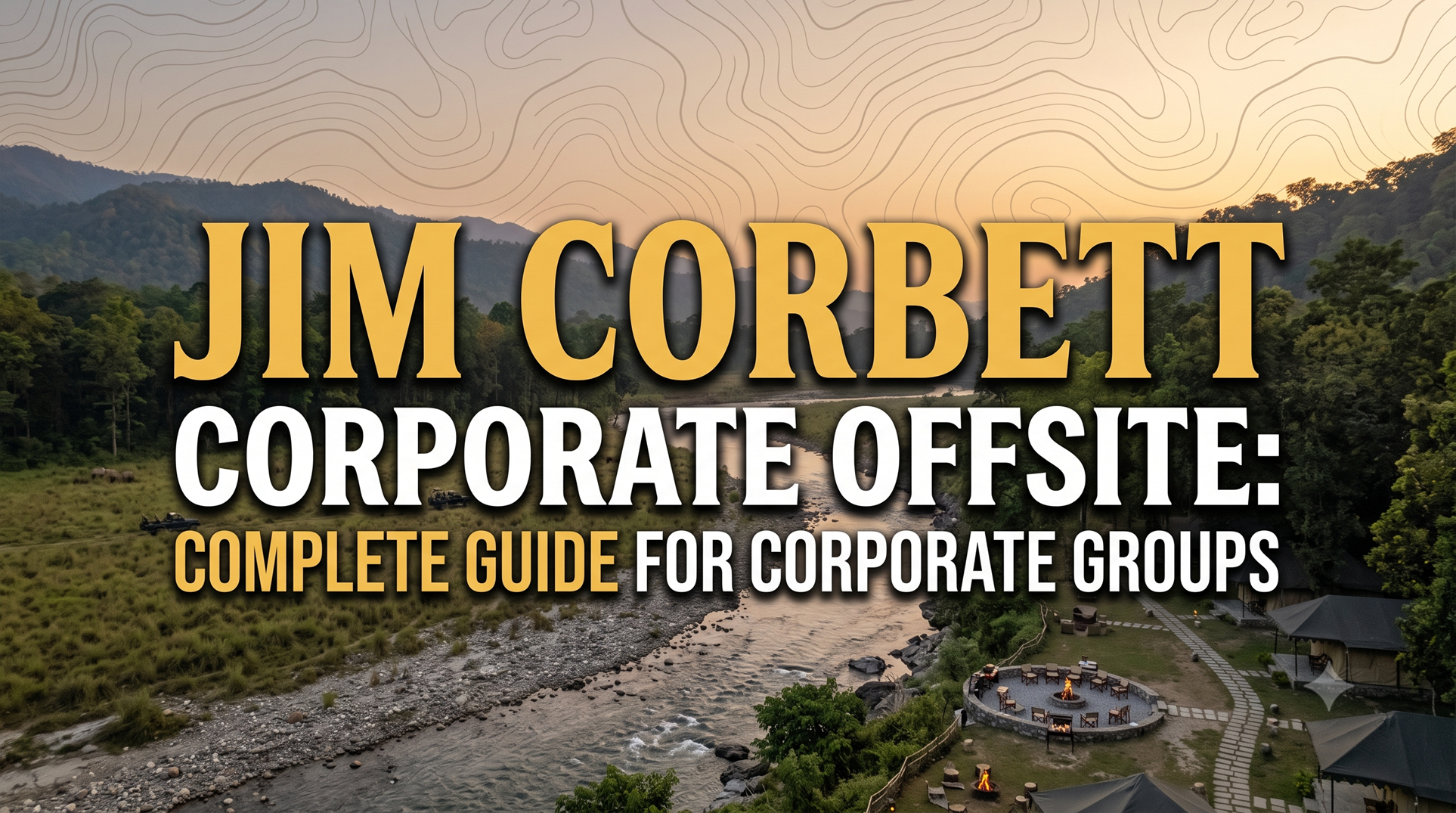
Jim Corbett Corporate Offsite: Complete Guide for Corporate Groups
There is a distinct energy that takes over when a corporate group leaves the expressway and enters the towering sal forests of the Kumaon foothills. The constant ping of Slack alerts and calendar invites gives way to the rustle of dry leaves, the calls of spotted deer, and the open expanse of the Kosi River basin.
For organizations seeking a balance between intensive strategic alignment and a genuine mental reset, a corporate offsite Jim Corbett offers an unbeatable formula. It is close enough to major North Indian commercial hubs to make road travel viable, yet wild enough to feel completely removed from daily office routines.
The very elements that make Jim Corbett enchanting - its dense forest buffers, wildlife corridors, and sprawling eco-resorts - require thoughtful logistical coordination. Managing jeep safari quotas across five forest zones, planning outdoor evening socials around strict forest sound regulations, and ensuring enterprise-grade Wi-Fi in the wild can challenge even experienced corporate event planners.
Whether you are coordinating an intimate 20-person executive council or transporting 180 team members for an annual company kick-off, this guide covers every operational aspect of planning a seamless retreat in Jim Corbett.
Why Jim Corbett Works for Corporate Teams
Corporate offsites often fall into the trap of being either too sterile (another standard business hotel in an airport district) or too chaotic (a leisure hub where attendees scatter into local nightlife). Jim Corbett hits the operational sweet spot:
- Contained Campus Dynamics: Corbett’s hospitality ecosystem is built on expansive, self-contained wilderness resorts covering 10 to 40 acres. Because external city distractions are non-existent, your team stays naturally unified throughout the retreat. Spontaneous conversations happen around morning coffee stations, walking between cottages, and beside evening bonfires.
- Proximity to Delhi-NCR and Northern Hubs: Located roughly 245 to 270 kilometers from Delhi, Gurgaon, and Noida, Corbett is easily accessible via the Delhi–Meerut Expressway and the Moradabad–Kashipur corridor. Teams avoid the delays, cancellations, and high per-head expenses of group air travel, loading into executive luxury coaches and reaching the forest in 5 to 6 hours.
- Memorable Wildlife and Nature Anchors: Stepping into an open-top 4x4 Gypsy at 6:00 AM to navigate mist-covered tiger reserves provides shared moments that team-building slide decks simply cannot create. Shared anticipation, collective patience, and the thrill of wildlife tracking bond people across organizational hierarchies.
- High-Capacity MICE Infrastructure: Unlike many remote nature reserves, Jim Corbett has evolved into a premier corporate and residential event destination. Luxury brands operate properties equipped with pillarless indoor ballrooms, extensive breakout lawns, reliable power backups, and seasoned banqueting staff.
Choosing Your Location: The 4 Key Resort Belts
Jim Corbett is not a single, compact town. Properties are spread across several distinct zones, each offering different river access, forest buffers, transit times, and conference facilities. Choosing the right corridor is your first major strategic decision.
1. The Dhikuli & Kosi Riverside Strip
Located along the main highway running north from Ramnagar, Dhikuli is the traditional hospitality hub of Corbett, bordered on one side by the national park and on the other by the pebble beds of the Kosi River.
- The Vibe: Vibrant, accessible, scenic, and well-developed.
- Top Properties: Taj Corbett Resort & Spa, Namah Resort (Radisson Individuals), The Riverview Retreat (Leisure Hotels Group), and Lemon Tree Premier Corbett.
- Best Suited For: Mid-to-large-scale annual corporate meets, sales kick-offs, and multi-department gatherings (60 to 200+ attendees).
- The Logistical Reality: Access roads are wide and comfortably handle 35- to 45-seater luxury coaches. Proximity to the Bijrani and Garjiya safari gates keeps morning safari departures punctual. Because multiple resorts sit side-by-side, late-night outdoor music is strictly monitored to prevent sound bleed between properties.
2. The Marchula & Ramganga Valley Corridor
Situated 25 to 35 kilometers upstream from Ramnagar, Marchula sits along the turquoise pools of the Ramganga River, nestled deeper into the lower Himalayan foothills.
- The Vibe: Dramatic, rugged, secluded, and peaceful.
- Top Properties: Welcomhotel by ITC Hotels (Jim Corbett, Marchula), Solluna Resort, and riverside boutique lodges.
- Best Suited For: Senior leadership huddles, executive retrospectives, and cross-functional teams seeking complete privacy (20 to 80 attendees).
- The Logistical Reality: Reaching Marchula requires an extra 45 to 60 minutes of winding mountain driving past Mohaan. Roads can be narrow in sections, making 20- to 27-seater mini-coaches or premium tempo travellers preferable to full-size buses. The payoff is immediate: towering cliff faces, absolute tranquility, and private riverside walking grounds.
3. The Kyari & Sitabani Landscape (Pawalgarh Belt)
Located southeast of the main national park boundary, this area comprises vast sal forests, quiet agricultural village settlements, and community eco-tourism corridors.
- The Vibe: Rustic, earthy, immersive, and community-centric.
- Top Properties: The Roar Resort, Camp Kyari, and boutique eco-estates.
- Best Suited For: Product and design sprints, creative agencies, and teams focused on sustainability, cycling trails, and active outdoor survival challenges.
- The Logistical Reality: The Sitabani forest zone does not fall under Project Tiger regulations, meaning it offers greater flexibility for walking safaris, night drives, and open nature trails that are prohibited inside the core park. Approach roads pass through rural village lanes, so coach drivers must be experienced and vetted.
4. The Dhela & Jhirna Corridor
Positioned south of Ramnagar, this belt provides direct access to the Dhela and Jhirna safari zones—the two gates open year-round for wildlife safaris.
- The Vibe: Expansive, open, peaceful, and forest-adjacent.
- Top Properties: Golden Tusk Resort, Corbett The Baagh Spa & Resort, and Acclaim Corbett.
- Best Suited For: Offsites scheduled during the shoulder or monsoon seasons (July to September), as well as mid-sized corporate groups seeking large open grounds for outdoor sports and experiential challenges.
- The Logistical Reality: Offers smooth access from Kashipur without needing to navigate the busy Ramnagar market bottleneck. Wide flat expanses allow properties to feature large lawns for staging and production setup.
Handpicked Resorts for Corporate Groups
Selecting the right resort requires balancing guest room capacity, meeting hall acoustics, and outdoor activity space. Here are vetted properties across primary corporate tiers:
For Luxury Executive Summits & CXO Boards (15–50 Pax)
- Taj Corbett Resort & Spa (Dhikuli): Spread across acres of landscaped gardens shaded by tall deodars and fruit trees, Taj Corbett provides an executive standard in the valley. Its standalone conference halls, riverside dining decks, and refined cottage villas offer privacy and service. Ideal for high-stakes leadership alignment where discretion and comfort are mandatory.
- Welcomhotel by ITC Hotels, Jim Corbett (Marchula): Perched along a dramatic cliff overlooking the Ramganga River, this modern luxury resort combines contemporary architecture with panoramic mountain views. Its well-proportioned boardrooms and river-facing banquet lawns provide an inspiring setting for executive focus.
- Aahana – The Corbett Wilderness (Sawaldeh): An eco-luxury resort sharing an extensive boundary wall with the Bijrani zone. Featuring Victorian-style stone cottages, organic farm-to-table dining, and a quiet ambiance, it is suited for leadership groups prioritizing sustainability, wellness, and reflection.
For Large Summits, Annual Kick-Offs & All-Hands (80–250+ Pax)
- The Riverview Retreat by Leisure Hotels (Dhikuli): A cornerstone for corporate offsites in Corbett. Situated right on the Kosi riverbank, it features over 90 guest rooms and private multi-room villas. With multiple pillarless conference halls, expansive lawns, and seasoned banqueting operations, it easily handles complex schedules and large team breakouts.
- Namah Resort Jim Corbett (Dhikuli): A premium river-facing resort that pairs contemporary rooms with extensive convention facilities. Its grand ballroom comfortably seats large delegations in theatre or cluster formats, backed by dedicated audio-visual setups and river-facing reception decks.
- The Golden Tusk (Dhela): Set across 10 acres near the Dhela River, this property features varied accommodation categories (luxury tents, suites, villas), multiple conference halls, and dedicated obstacle activity courses on-site. Its layout easily supports large corporate groups with multi-track agendas.
- Lemon Tree Premier, Corbett (Mohaan): Perched beside the Kosi River near Mohaan, this property offers consistent brand standards, modern meeting amenities, and scenic views, making it a reliable option for tech and enterprise retreats.
Mastering the Jungle Safari Logistics
A wildlife safari is typically the highlight of a Jim Corbett offsite. However, unlike booking a fleet of private cabs, jungle safari permits operate under strict government quotas managed by the Uttarakhand Forest Department.
To avoid disappointing your group, keep these critical booking rules in mind:
- The Zone System: The park is divided into distinct zones: Dhikala (famed for vast grasslands, day visits permitted only via forest Canters), Bijrani (prime tiger-sighting terrain, open October to June), Jhirna & Dhela (open year-round), and Garjiya / Durga Devi. Sitabani operates as a scenic buffer zone.
- Mandatory Government ID Details: Every individual safari permit requires the attendee's full legal name, age, gender, and official government ID number (Aadhaar or Passport) uploaded well in advance. Last-minute name changes or substitutions at the gate are strictly prohibited by forest authorities.
- The 45-Day Booking Window: Forest department booking portals open permits for Indian nationals roughly 45 days in advance (and up to 90 days for foreign nationals). If you are hosting a group of 60 people, you will need approximately 10 individual 4x4 Gypsies (each seating a maximum of 6 guests plus a driver and forest guide). Securing 10 permits for the same morning slot in a prime zone like Bijrani requires coordinating with your event partner the moment booking windows open.
- Canter Safaris vs. Jeep Safaris for Large Groups: For groups over 80 people where booking 15+ individual Gypsies is logistically difficult, consider booking Dhikala Canter Safaris. These open-roof, heavy-duty forest buses seat 16 to 18 attendees per vehicle and provide exclusive daytime access to the core Dhikala grasslands.
- Strict Forest Etiquette: Brief your team before departure: absolute silence must be maintained near wildlife, phones must remain on silent, bright clothing (red, neon, stark white) is banned in favor of earth tones (khaki, olive, brown), and drones are prohibited under severe legal penalty.
5 Meaningful Team Activities That Avoid "Forced Fun"
High-performing corporate teams resist corny trust falls and awkward icebreakers. Jim Corbett provides a rugged outdoor landscape for shared challenges that build natural trust, strategic thinking, and teamwork.
1. The Wilderness Survival & Raft-Building Challenge
Move your team to the calm, stony stretches of the Kosi or Ramganga riverbeds. Split the organization into cross-functional squads of 6 to 8 colleagues. Provide each team with limited raw resources: bamboo poles, rubber tubes, hemp ropes, and basic tools. Their mission: design and construct a water-worthy raft, nominate a captain, and successfully navigate a 100-meter river stretch.
- Corporate Value: It highlights leadership emergence, resource allocation, and practical execution. Team members must listen, iterate on design flaws, and rely on each other's physical efforts to stay afloat.
2. Guided Morning Nature Walk & Birding Retrospective
Core park zones ban walking on foot, but Corbett’s buffer forests and river corridors offer safe, guided nature trails. Pair small groups with expert local naturalists at 6:30 AM. As the team identifies hornbills, kingfishers, and animal tracks, weave in a structured, mobile conversation: each team member shares one professional "blind spot" their team cleared over the last quarter.
- Corporate Value: The calm, rhythmic movement through nature lowers interpersonal defenses. Conversations flow naturally without the awkward eye contact of a boardroom table.
3. The Sitabani Eco-Navigation Challenge
Equip teams with localized topographical maps, compasses, and riddle sheets tied to regional flora, fauna, and internal company milestones. Teams navigate forest pathways on foot or mountain bicycles, locating hidden checkpoints and collecting clues to unlock a shared organizational objective.
- Corporate Value: Fosters decentralized decision-making and cross-departmental communication under light time constraints without feeling stressful.
4. Interactive Rhythm Circle & Kumaoni Folk Fusion
Instead of a standard party DJ on the opening evening, bring the entire company around a central campfire. Seat everyone in a wide circle, each with an authentic djembe, tambourine, or shaker. A professional percussionist guides the room from initial disjointed beats into a synchronized, high-energy rhythm, eventually blending with local Kumaoni folk drummers and vocalists.
- Corporate Value: A powerful, non-verbal metaphor for cross-departmental alignment. It dissolves professional titles, shifts the group out of analytical fatigue, and sets a collaborative tone for the weekend.
5. Outdoor Culinary Mystery-Box Challenge
Set up field cooking stations on the resort lawn, complete with portable gas burners, local utensils, and pantry stations. Teams receive mystery boxes featuring regional Uttarakhand produce - pahadi rajma, jakhiya seeds, fresh local greens, and mountain honey. Under the guidance of resort chefs, teams have 75 minutes to plan, cook, and present a cohesive three-course meal.
- Corporate Value: Tests rapid ideation, task delegation, time management, and role specialization, concluding with a relaxed, shared tasting session.
The 3-Day Jim Corbett Offsite Framework
Structuring a retreat in the wild requires balancing intense business workshops with restorative natural immersion. Rushing attendees through back-to-back presentations undermines the primary benefit of leaving the city.
Here is a tested, high-impact 3-day itinerary design:
Day 1: Decompression, Setting the Vision & The Forest Bonfire
- 06:00 AM – 12:00 PM: Scenic Luxury Coach Transit from Delhi-NCR
- Board private air-conditioned executive coaches. Provide a curated breakfast box, mineral water, and an offsite prep kit. Include one midway refreshment stop along the expressway.
- 12:30 PM – 02:00 PM: Group Arrival, Forest Welcome & Check-In
- Arrive at the resort. Greet team members with chilled rhododendron mocktails, warm face towels, and a quick digital key-handover at a private hospitality desk. Allow guests to unpack and settle into their cottages.
- 02:00 PM – 03:30 PM: Casual Welcome Lunch (Terrace Setting)
- A light, restorative buffet featuring fresh seasonal salads, grilled proteins, and local Kumaoni specialties overlooking the river or forest.
- 03:30 PM – 05:30 PM: Session 1 — The State of the Business (Plenary)
- Convene in the main hall. Leadership delivers a candid, transparent 30-minute address reviewing current business headwinds, annual victories, and the strategic focus of the retreat. Conclude with an open, unscripted town hall Q&A.
- 05:30 PM – 07:00 PM: Protected Personal White Space
- Ninety minutes of unstructured time. Introverts can rest in their rooms; others can explore the grounds, visit the pool, or clear urgent client emails.
- 07:00 PM – 08:30 PM: Sundowner Bonfire & Live Acoustic Session
- Gather around open fire pits on the lawn. Enjoy acoustic music, warm spiced drinks, and light appetizers under the mountain sky.
- 08:30 PM – 10:30 PM: Welcome Barbecue Dinner
- An informal outdoor dinner under string lights. No speeches or presentations tonight; keep the focus on casual conversation across teams.
Day 2: Strategic Alignment, Adrenaline & Celebration
- 05:45 AM – 09:30 AM: Signature Experience — Morning 4x4 Jeep Safari
- Early morning departure in open Gypsies into Bijrani, Jhirna, or Garjiya zones. Experience the forest coming alive at sunrise, search for wildlife tracks, and enjoy a packed breakfast at an authorized forest station.
- 09:30 AM – 10:30 AM: Return to Resort & Freshen Up
- Time to wash off the forest dust, enjoy a hot coffee, and transition into business casual wear.
- 10:30 AM – 01:00 PM: Session 2 — Cross-Functional Breakouts & OKR Mapping
- Split into cross-departmental groups across breakout lawns or conference halls. Teams tackle high-friction internal operational bottlenecks and map collaborative quarterly roadmaps.
- 01:00 PM – 02:15 PM: Working Lunch
- A clean, protein-forward meal designed to sustain mental alertness without an afternoon energy dip.
- 02:30 PM – 04:30 PM: Session 3 — The Cross-Departmental Commitment Exchange
- Breakout teams present their concrete action plans. Department heads negotiate dependencies live, align resources, and finalize quarterly commitments directly in the room.
- 04:30 PM – 06:30 PM: Outdoor Team Challenge (Raft Building or Survival Games)
- Shift physical energy outdoors along the riverbed or resort lawns for a collaborative, high-energy team challenge.
- 06:30 PM – 07:30 PM: Downtime & Gala Preparation
- Time to rest, dress up, and prepare for the evening gala.
- 07:30 PM – 11:30 PM: The Forest Gala & Annual Recognition Night
- Host a themed celebration dinner on the lawn or in the grand ballroom. Feature peer-nominated values awards, leadership recognition, a curated dinner spread, and an indoor DJ set after 10:00 PM.
Day 3: Synthesis, Commitment & Smooth Departure
- 08:30 AM – 10:00 AM: Leisurely Farewell Breakfast
- An unhurried breakfast where colleagues exchange contacts, photos, and reflections from the weekend.
- 10:00 AM – 11:15 AM: Closing Plenary — The Commitments Circle
- A focused closing session. Leadership summarizes the strategic commitments established on Day 2 and celebrates the team's shared direction.
- 11:30 AM: Room Check-Out & Boarding Coaches
- Luggage handling managed directly to the buses. Board executive coaches for the return journey to Delhi-NCR, arriving by late evening.
Budgeting Framework: Realistic Cost Breakdowns
Budget planning for an offsite in Jim Corbett requires accounting for room plans, forest permit tariffs, conference equipment rentals, and coach transport. The following guidelines represent realistic per-head cost allocations across typical corporate tiers:
1. Luxury Wilderness & CXO Tier (Premier Brands)
- Estimated Investment: Rs. 10,000 to Rs. 30,000+ per attendee, per night.
- What It Covers: Single-occupancy luxury cottages or riverfront suites at top-tier properties (e.g., Taj Corbett, Welcomhotel Marchula, Aahana), full American Plan (AP) dining, private 4x4 Gypsy safaris, customized conference setups, and dedicated event coordination.
- Best For: C-suite strategy retreats, founders' councils, and executive leadership alignment.
2. Premium MICE & Riverside Resort Tier
- Estimated Investment: Rs. 8,000 to Rs. 15,000 per attendee, per night.
- What It Covers: Single or double-occupancy rooms at established corporate resorts (e.g., The Riverview Retreat, Namah, Golden Tusk), full conference buffet meal plans, dedicated ballroom use, professional AV production (LED walls, sound, lighting), facilitated outdoor challenges, and jeep safaris.
- Best For: Mid-to-large-scale annual kick-offs, high-growth startup all-hands, and cross-functional company offsites.
3. Contemporary Business & Eco-Lodge Tier
- Estimated Investment: Rs. 4,500 to Rs. 10,500 per attendee, per night.
- What It Covers: Twin-sharing accommodation at reliable 4-star properties or luxury eco-lodges, basic conference halls with projection, standard buffet meals, bonfire evenings, and nature activities.
- Best For: Mid-level functional teams, hackathons, and budget-conscious retreats.
Key Budget Categories to Plan For
- Accommodation & Venue Facilities (45%): Room blocks, conference hall base fees, lawn buyout charges, and backup power support.
- Food & Beverage (25%): Buffet breakfasts, working lunches, coffee break stations with live counters, and gala banquets.
- Ground Logistics & Coach Charters (12%): Delhi-NCR executive 45-seater luxury coaches, local Gypsy rentals for safaris, and luggage transport.
- AV Production, Staging & Tech (10%): Sound systems, wireless microphones, LED video walls, ambient garden lighting, and on-site technicians.
- Safaris, Permits & Facilitation (8%): Government forest entry fees, Gypsy vehicle charters, certified guides, and professional team facilitators.
Navigating Corbett’s Seasons
Choosing the right time of year ensures comfortable weather for outdoor activities and helps protect your event budget.
Peak Season (November to February)
- The Climate: Crisp, sunny days (18°C to 24°C) with cold, invigorating nights (5°C to 9°C). Morning mists over the river create scenic views.
- The Advantage: Superb weather for daylong outdoor meetings, riverbed sports, and evening bonfires. All park zones (including Dhikala) are open.
- The Challenge: High demand. Resorts book up months ahead with corporate and leisure travelers, requiring contract confirmation 3 to 5 months in advance.
- Planning Rule: Emphasize outdoor lawn sessions during midday sunshine (11:00 AM to 3:30 PM), plan indoor dinners, and ensure the resort provides adequate in-room heating or bonfires.
The Spring Window (March to April)
- The Climate: Warm, pleasant days (26°C to 32°C) with comfortable, cool evenings.
- The Advantage: Excellent daylight hours, high wildlife movement around water bodies, and comfortable temperatures for outdoor challenges and poolside sundowners.
- The Challenge: Midday sun can get warm for extended outdoor sports, making morning or late-afternoon scheduling essential.
The Summer Wildlife Window (May to June)
- The Climate: Dry heat with midday temperatures reaching 38°C to 42°C.
- The Advantage: Peak wildlife sightings, as animals gather around the drying riverbeds and water holes. Resorts offer attractive corporate rates and flexible booking terms.
- Planning Rule: Schedule all business workshops in air-conditioned indoor conference halls between 10:00 AM and 5:00 PM. Reserve open-air activities for early morning safaris and evening twilight gatherings.
The Monsoon Window (July to mid-October)
- The Climate: Lush green landscapes, flowing rivers, and periodic heavy rainfall.
- The Advantage: Substantial budget savings. Luxury resorts offer packages at 30% to 50% below winter rates. The misty, quiet atmosphere is well suited for reflective strategy sessions and software sprints.
- The Challenge: Core park zones (Dhikala and Bijrani) are closed for seasonal breeding and road maintenance. However, Jhirna, Dhela, and Sitabani remain open year-round.
- Planning Rule: Choose resorts with modern indoor ballrooms and covered walkways to prevent rain from disrupting your schedule.
5 Practical Traps to Avoid in Jim Corbett
Organizing an offsite in a national park corridor requires practical foresight. Avoid these common missteps:
1. The 10:00 PM Forest Sound Curfew
Because resorts border protected wildlife habitats, the forest department and local administration enforce a strict 10:00 PM outdoor noise curfew. Loudspeakers, amplified musical instruments, and outdoor DJs are strictly prohibited after 10:00 PM.
- The Solution: Plan your evening agenda accordingly. Host outdoor sundowners, speeches, and dinner on the lawn between 7:00 PM and 10:00 PM. Transition the after-party, DJ setup, and music into a sound-insulated indoor ballroom after 10:00 PM.
2. Assuming Cell Coverage Equals Wi-Fi Reliability
Mobile voice networks (Airtel, Jio) offer decent coverage along the main Dhikuli corridor, but signals drop sharply in deep valley pockets like Marchula or Kyari. A typical guest Wi-Fi connection will struggle if 80 people log on at once for file downloads and video calls.
- The Solution: Contract a dedicated corporate leased line or private VLAN with guaranteed bandwidth (minimum 50 to 100 Mbps) for your primary conference hall. Test connection speeds during an on-site advance visit.
3. Last-Minute Safari Guest Substitutions
Corporate rosters can change in the final week due to illness or urgent client emergencies. In a city hotel, updating a room name is straightforward; in a tiger reserve, forest permits are issued against verified government IDs.
- The Solution: Collect attendee IDs early during offsite registration. Book safari slots with a small margin of extra permits under standby staff names, or ensure leadership understands that unused permits cannot simply be transferred at the gate.
4. Narrow Approach Roads for Large Luxury Coaches
While the main highway from Moradabad to Ramnagar is well-paved, the final access roads leading from the highway to riverside resorts can be narrow, winding village lanes. Full-sized 45-seater Volvo coaches can struggle with tight turns and low-hanging branches.
- The Solution: Check final property approach road clearances with your venue lead. When booking large groups for secluded riverside or valley properties, using two 27-seater executive mini-coaches is often smoother than using one massive 45-seater bus.
5. Over-Scheduling the Travel Day
The road journey from Delhi-NCR takes 5 to 6 hours under normal traffic, but highway bottlenecks near Hapur or Moradabad can add an hour. Scheduling a high-stakes, 3-hour strategy meeting at 2:00 PM on arrival day guarantees an exhausted, disengaged room.
- The Solution: Treat the travel afternoon as an arrival and decompression window. Keep the first day's business agenda light - focusing on a high-level opening address and town hall - and save deep analytical workshops for Day 2 after attendees have enjoyed a restful night's sleep.
Site Inspection Checklist: What to Look for Before Signing
If possible, send an event coordinator or HR lead on a one-day advance site inspection to your shortlisted properties. Focus on these operational details:
- Conference Hall Ceiling Height & Pillars: Ensure the ceiling height is sufficient (at least 12 to 14 feet) for clear screen and stage visibility, and verify that central pillars do not obstruct guest sightlines.
- Generator Backup Capacity: Mountain areas can experience power fluctuations. Verify that the property has heavy-duty silent generator backups (100% DG backup) capable of powering both full air-conditioning and delicate AV equipment simultaneously.
- Cottage Layout and Walkability: In sprawling 20-acre resorts, guest cottages can be spread across hilly paths. Check the walking distances between rooms, dining halls, and the main conference hall. Ensure the resort provides enough internal golf buggies to transport senior leaders or guests with mobility needs.
- Banquet Lawn Drainage: If hosting an event near the shoulder or monsoon seasons, inspect the lawn grading to ensure outdoor banquet grounds do not retain water after a passing shower.
- Dedicated Coach Parking: Ensure the resort property features secure, on-site parking for your transport coaches, along with dedicated rest and dining facilities for drivers.
Bringing It All Together: The Strategic Return of a Corbett Retreat
A corporate offsite in Jim Corbett is far more than a weekend getaway. When planned with clear goals and logistical discipline, it acts as an organizational catalyst. It removes people from daily metro stress, levels corporate hierarchies, and creates a distraction-free setting where teams can focus on big-picture strategy.
By combining structured, high-stakes business sessions with the grounding presence of the Himalayas and the thrill of the jungle, you build an experience that stays with your team. Colleagues return to their desks aligned on goals, closer as individuals, and ready to drive your business forward.
Ready to Plan a Seamless Corporate Offsite in Jim Corbett?
Take the operational stress out of your retreat planning. From securing group room blocks and corporate rates at premier riverside resorts to managing safari permits, luxury coach transit, AV staging, and outdoor team challenges—we take care of every detail from start to finish.
[Schedule Your Free Jim Corbett Offsite Strategy Call]
Tell us your estimated group size, tentative dates, and retreat objectives. We will deliver a customized, fully inclusive proposal designed to maximize your budget and impact.