.png)
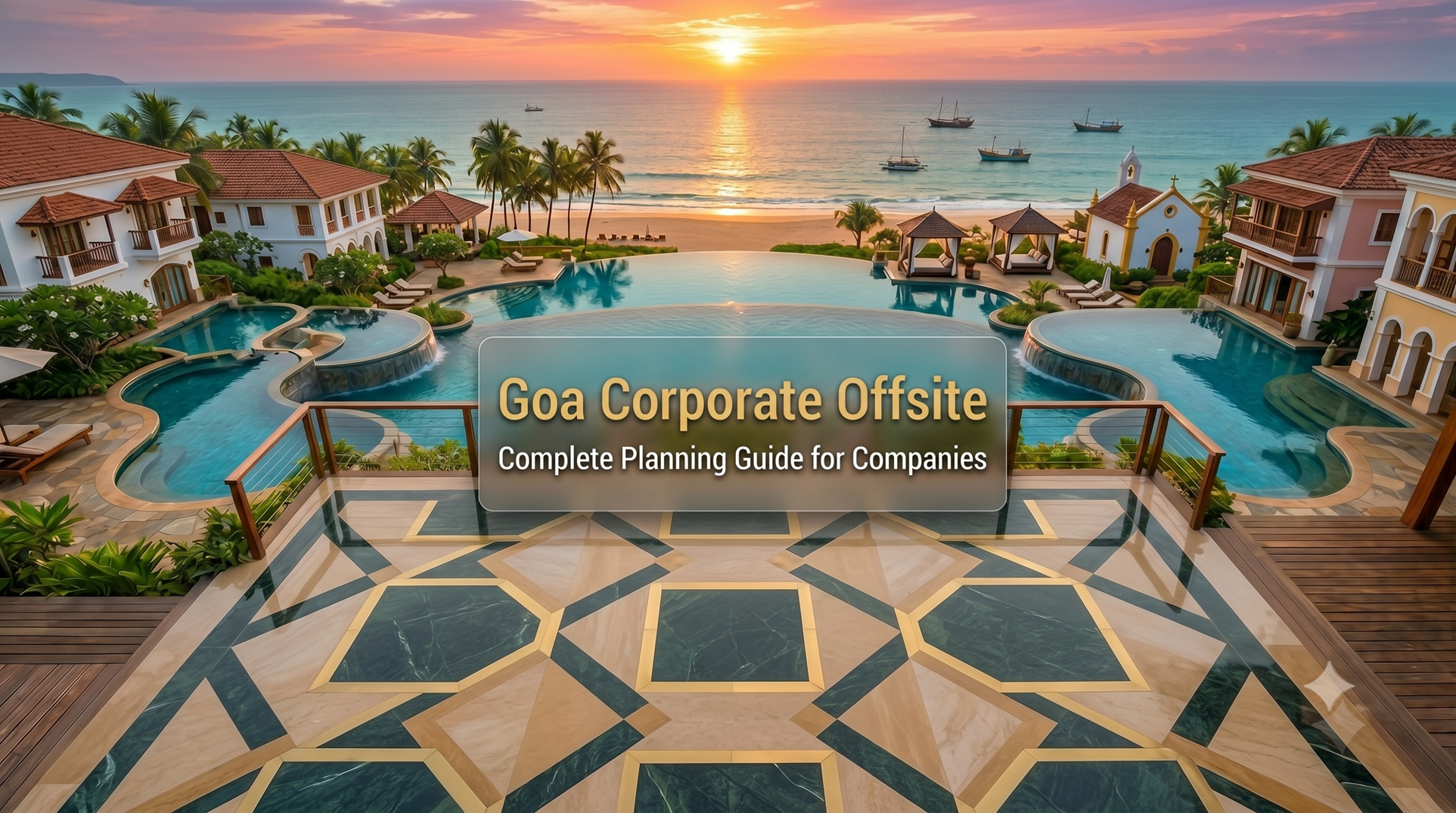
Goa Corporate Offsite: Complete Planning Guide for Companies
Goa has an undeniable pull. Mention it on an internal company call, and engagement spikes instantly. The prospect of swapping glass-and-steel boardrooms for palm-fringed lawns, ocean breezes, and coastal sunsets has a way of turning even the most meeting-weary team members into enthusiastic travelers.
Yet, from an organizer’s perspective, Goa represents a distinct paradox.
On one hand, it boasts some of the country’s finest luxury hospitality infrastructure, an abundance of direct flight connections from major metropolitan hubs, and an ambiance that naturally breaks down corporate silos. On the other hand, it is a region where casual coastal ease can easily collide with rigid enterprise timelines. A delayed transfer coach stuck in narrow village lanes, an outdoor audio setup drowned out by sudden coastal gusts, or a venue located an hour away from your planned dinner spot can unravel an otherwise polished retreat.
Pulling off a high-impact corporate offsite Goa experience requires looking beyond the postcard aesthetic. It demands deliberate logistical planning, realistic budgeting, and an agenda that honors the delicate balance between rigorous strategic alignment and restorative downtime.
Whether you are hosting an intimate 15-person leadership huddle or flying out a 200-strong team for an annual kick-off, this guide walks you through every tactical detail of planning an offsite in Goa.
North Goa vs. South Goa: The Critical First Decision
The single most consequential choice you will make during corporate offsite planning in Goa is picking between the North and the South. Treating the state as a single, uniform destination is the quickest way to end up with an offsite that clashes with your company's core objectives.
The two regions offer vastly different operating environments, transit realities, and cultural atmospheres.
South Goa: Focused Immersion, Seclusion, and Scale
South Goa is defined by expansive coastal luxury resorts, wide stretches of clean white sand, quiet fishing hamlets, and expansive open acreage.
- The Vibe: Private, unhurried, serene, and sophisticated.
- Property Architecture: Large-format five-star properties spanning tens of acres. Think sprawling beachfront lawns, standalone convention wings, private beach access, and multiple on-site dining outlets.
- Best Suited For:
- Mid-to-large-scale all-hands meets (100–300+ attendees).
- High-stakes strategic executive retreats requiring absolute discretion.
- Companies whose agendas prioritize keeping the entire team contained within a single resort campus for work, dining, and evening socials.
- The Trade-Off: South Goa is relatively insulated. If your leadership team wants attendees to explore bustling local restaurants, boutique bistros, or lively beach clubs after dark, transit from the South involves 45-to-90-minute cab rides along winding state highways.
North Goa: Energy, Culture, and Experiential Dining
North Goa is vibrant, eclectic, and culturally active. It is home to India’s most innovative culinary scene, historic Portuguese-influenced neighborhoods, co-working spaces, and boutique luxury estates.
- The Vibe: High-energy, dynamic, entrepreneurial, and social.
- Property Architecture: A mix of boutique design hotels, restored heritage villas, and select large-format five-star properties clustered around Candolim, Calangute, and the northern stretches of Morjim and Mandrem.
- Best Suited For:
- Fast-moving startups, creative agencies, and product teams (20–80 attendees).
- Leadership groups that view food, craft mixology, and external nightlife as integral components of their team-bonding strategy.
- Multi-day retreats with built-in afternoon "workation" or exploratory segments.
- The Trade-Off: High-traffic congestion along arterial roads (especially around Candolim, Porvorim, and Anjuna), smaller banqueting halls, and higher ambient noise levels that can interfere with sensitive outdoor working sessions.
Getting There: Navigating the Two-Airport Reality
Until recently, all commercial corporate air traffic touched down at Dabolim Airport (GOI) in central-south Goa. The operational expansion of Manohar International Airport in Mopa (GOX) in the far north has fundamentally reshaped Goa’s transport logistics.
Matching your venue choice to the right arrival airport is essential for minimizing transit fatigue.
Mopa Airport (GOX) - Far North
- Ideal Destinations: Morjim, Ashwem, Mandrem, Siolim, Vagator, and Anjuna.
- Transit Realities: A direct 35-to-45-minute drive via modern multi-lane expressways into North Goa’s prime boutique hubs.
- Pitfall to Avoid: Booking a resort in South Goa (such as Cavelossim, Benaulim, or Mobor) while landing flights at Mopa. That journey requires a 2-to-2.5-hour cross-state bus trek through high-density urban corridors, exhausting your team before the offsite even begins.
Dabolim Airport (GOI) - Central / South
- Ideal Destinations: Bogmalo, Majorda, Colva, Benaulim, Cavelossim, and central business hubs like Panaji and Bambolim.
- Transit Realities: Quick 20-to-45-minute transfers to almost all premier South Goa luxury resorts.
- Pitfall to Avoid: Booking large coach fleets for transit during peak local commute hours (5:00 PM – 7:30 PM) across the Zuari and Mandovi bridge approaches, where bottleneck delays are common.
Pro Logistical Tip for Flight Blocks
When negotiating group airfare blocks with airlines, avoid mixing arrival airports across your attendee roster. If half your team lands at Mopa at 11:00 AM and the other half touches down at Dabolim at 11:30 AM, you double your ground coordination overhead, require split coach fleets, and complicate unified check-in times. Standardize on one port of entry wherever possible.
When to Go: Aligning Seasons with Corporate Objectives
Goa’s corporate calendar does not align strictly with its leisure tourist calendar. Understanding regional weather and seasonal pricing fluctuations will save substantial budget while protecting your itinerary from environmental disruptions.
Peak Corporate Season (October to February)
- The Conditions: Crisp morning breezes, warm sunny afternoons, and zero rainfall. Daytime temperatures hover around 28°C to 32°C with low humidity.
- The Pros: Perfect weather for outdoor sundowners, beachside team challenges, lawn banquets, and open-air workshops.
- The Cons: Premium rack rates for rooms, strict minimum-spend guarantees for banqueting lawns, and severe competition for charter coaches and production vendors.
- Planning Rule: Secure your property contracts at least 5 to 7 months in advance. Late booking during these months forces severe compromises on meeting hall availability.
Shoulder Season (March to May)
- The Conditions: Clear blue skies with rising midday heat and coastal humidity (temperatures often touch 34°C to 36°C).
- The Pros: Substantially better room negotiations, flexible venue buyout options, and properties eager to offer complimentary inclusions like upgraded AV setups or cocktail hours.
- The Cons: Midday outdoor team building is impractical due to heat.
- Planning Rule: Structure your schedule so all business sessions and interactive workshops happen in climate-controlled indoor halls between 9:30 AM and 4:30 PM, reserving pool decks and beachfront lawns exclusively for post-sunset gatherings.
The Monsoon Magic (June to September)
- The Conditions: Continuous coastal rains, lush green landscapes, dramatic skies, and cooler ambient temperatures.
- The Pros: Phenomenal commercial value. High-end five-star resorts offer packages at 30% to 50% below peak-season rates. The natural setting creates a cozy, introspective atmosphere ideal for deep strategic planning, product sprints, and reflective executive discussions.
- The Cons: Outdoor beach setups, open-air barbecues, and lawn activities are completely off the table. Sudden torrential downpours can disrupt transit schedules.
- Planning Rule: Book properties that feature interconnected covered corridors between guest rooms, dining halls, and conference facilities. Require dedicated indoor contingency halls for all meals and gatherings.
Anatomy of the Ideal Goa Corporate Offsite Agenda
An offsite agenda in Goa must resist the temptation to crowd every hour with slides. If attendees fly to Goa only to spend 10 hours a day inside a windowless basement ballroom, resentment builds quickly.
The secret to a successful Goa retreat is intentional pacing: intense, distraction-free strategic work in the morning, followed by restorative, collaborative experiences as the afternoon cools down.
Day 1: Alignment, Settling In & Casual Connection
- 10:00 AM – 12:30 PM: Coordinated Arrivals & Welcome Lounge
- Set up a dedicated hospitality desk in the hotel lobby. Greet arriving attendees with chilled tender coconut water, local kokum coolers, and quick digital check-ins. Allow people time to settle into their rooms, unpack, and freshen up.
- 12:30 PM – 02:00 PM: Welcome Lunch with Coastal Flavors
- Host a light, energizing lunch featuring fresh local seafood, coastal curries, and clean salads. Avoid overly heavy buffets that trigger afternoon lethargy.
- 02:00 PM – 04:30 PM: Plenary Session - The State of the Organization
- Convene in the main conference hall. Open with a transparent, inspiring address from leadership. Lay out the state of the business, key challenges, and the unifying focus of the retreat. Keep presentations concise, leaving ample room for open Q&A.
- 04:30 PM – 06:30 PM: Protected Downtime & Property Exploration
- Do not schedule mandatory activities here. Let introverts recharge in their rooms, and give attendees space to clear urgent emails, walk the beach, or visit the pool.
- 06:30 PM – 08:30 PM: Sunset Sundowner on the Beach Lawn
- Shift to an open-air coastal deck or private lawn. Feature curated signature drinks, acoustic live music, and light appetizers as the sun sets over the Arabian Sea.
- 08:30 PM – 10:30 PM: Casual Welcome Barbecue Dinner
- An informal, open-seating dinner under string lights. No speeches or presentations tonight; focus entirely on helping colleagues reconnect naturally across departments.
Day 2: Strategic Focus, Experiential Bonding & Celebration
- 07:30 AM – 08:30 AM: Optional Morning Activation
- A gentle 45-minute coastal yoga flow, breathwork session, or beach run for early risers. Keep this entirely opt-in.
- 08:30 AM – 09:30 AM: Energizing Breakfast Buffet
- Fresh juices, eggs made to order, and local artisanal breads.
- 09:30 AM – 11:30 AM: Cross-Functional Departmental Workshops
- Split into cross-departmental cohorts. Focus on solving high-friction operational bottlenecks or mapping out quarterly OKRs.
- 11:30 AM – 12:00 PM: Refreshment Break with High-Grade Espresso & Fresh Coconut
- Step out into natural light to reset attention spans.
- 12:00 PM – 01:30 PM: Action Commitments & Roadmap Pitch
- Teams present concrete deliverables and 90-day action commitments back to the wider group.
- 01:30 PM – 02:45 PM: Working Terrace Lunch
- Casual dining overlooking the gardens or ocean.
- 03:00 PM – 05:30 PM: Signature Curated Experience
- Move the team out of the conference environment into an engaging, collaborative experience (e.g., an e-bike heritage exploration through historic Latin quarters, a private catamaran cruise, or a team culinary cook-off).
- 05:30 PM – 07:00 PM: Rest & Preparation for Gala Evening
- Time to relax, recharge, and change into evening wear.
- 07:00 PM – 11:30 PM: The Gala Dinner & Team Recognition Night
- A themed gala evening with customized stage staging, peer-nominated cultural awards, a curated multi-course dinner, and a live band or DJ set to celebrate shared milestones.
Day 3: Reflection, Synthesis & Seamless Departure
- 08:30 AM – 10:00 AM: Extended Breakfast & Final Networking
- An unhurried breakfast where colleagues exchange contacts, snap photos, and discuss next steps.
- 10:00 AM – 11:15 AM: Executive Wrap-Up & Closing Commitments
- A short, meaningful closing circle. Leadership summarizes key decisions made over the weekend and reaffirms organizational vision.
- 11:30 AM: Room Check-Out & Staggered Airport Departures
- Pre-arranged coach shuttles scheduled to transport waves of attendees cleanly back to their departure terminals without waiting in lines.
5 Unique Team Activities That Avoid "Forced Fun"
Standard hotel-led trust falls and egg-and-spoon races feel outdated and often cause eye-rolls among modern professionals. Goa provides an exceptional backdrop for experiential team-building that feels authentic, engaging, and genuinely enjoyable.
1. Heritage E-Bike Explorations in Old Goa or Divar Island
Instead of packing everyone onto a tour bus, equip small squads of 8 to 10 colleagues with electric bicycles and local cultural guides. Route them through the sleepy, scenic backwaters of Divar Island or the heritage architecture of Fontainhas in Panaji. It combines light physical activity, problem-solving checkpoints, and cultural immersion without high pressure.
2. Private Catamaran Regatta on the Mandovi or Chapora
Charter two or three luxury catamarans for an afternoon sailing challenge. Teams learn the basics of coastal sailing navigation, coordinate rope handling with skippers, and finish with a relaxed open-water swim and deck barbecue. It creates natural bonding in an open, refreshing environment.
3. Spice Plantation Culinary Cook-Off
Head into the dense foothills of Ponda to a historic organic spice plantation. After a guided tour exploring nutmeg, cinnamon, and pepper harvesting, split your organization into cross-functional cooking squads. Under the guidance of master home chefs, teams compete to prepare the most aromatic regional coastal curry using freshly ground spices. It tests team role allocation, timing, and creativity, followed by a shared family-style lunch.
4. Coastal Conservation & Beach Regeneration Drive
High-performing teams, particularly younger workforces, place high value on corporate social responsibility. Partner with local marine conservation non-profits for a structured coastal cleanup, dune grass planting, and micro-plastic auditing workshop along a designated stretch of coast. It fosters meaningful pride and shared purpose before evening celebrations begin.
5. Feni Tasting & Master Mixology Masterclass
Move beyond standard open-bar setups. Invite a heritage distiller or master mixologist to walk your team through the artisanal production of cashew and palm feni—Goa’s indigenous spirit. Follow the history lesson with a hands-on cocktail creation competition where teams invent and name a signature company cocktail using local botanicals, kokum, and tropical fruits.
Budgeting Framework: Realistic Cost Allocation
Budgeting for a corporate offsite in Goa requires factoring in seasonal rate spikes and hidden operational costs. Below is a realistic framework for distributing your overall budget per head across essential categories:
Accommodation & Venue Infrastructure (40% – 45% of Total Budget)
- Single vs. Twin Sharing: Providing single-occupancy rooms for senior leadership and comfortable twin-sharing rooms for mid-level teams is standard practice.
- Conference Space & Hall Rentals: When booking significant room blocks (e.g., 40+ rooms), luxury properties often waive the base conference hall rental fee. However, ensure your contract explicitly includes breakout lawn space and dedicated foyer areas without supplemental fees.
- Power Backup & Extended Air-Conditioning: Check that the contract covers 24/7 dedicated generator backup for meeting halls and AV production.
Food & Beverage (25% – 30% of Total Budget)
- Meal Plans (AP vs. MAP): The American Plan (AP), which covers breakfast, lunch, and dinner, is typically the most cost-effective structure for South Goa offsites where teams stay on campus. In North Goa, consider a Modified American Plan (MAP—breakfast and one major meal) to allow flexibility for off-property experiential dinners.
- Evening Socials & Liquor Licensing: When hosting outdoor lawn dinners with alcohol, factor in the state excise permit fee (which the hotel or your event partner must procure) alongside corkage policies if bringing in specialized liquor brands.
- Continuous Conference Refreshments: Budget for mid-morning and mid-afternoon high-tea stations featuring specialty coffees, coconut water, fresh fruits, and savory finger foods.
Ground Logistics & Airport Mobility (10% – 15% of Total Budget)
- Coach Charters: Air-conditioned 27-seater or 35-seater executive coaches are ideal for navigating Goa's regional roads. Avoid 50-seater full-size coaches in North Goa, as they struggle with narrow village access roads leading to boutique properties.
- Buffer Transit: Retain at least two dedicated private sedans or SUVs on-site around the clock for logistical errands, VIP movements, or unexpected medical contingencies.
AV Production, Staging & Content (8% – 12% of Total Budget)
- Production Standards: High-brightness commercial projection systems or P3 LED video walls, dual wireless lapels, roaming microphones, stage risers, and branded backdrop printing.
- Ambient Evening Lighting: Transforming a standard hotel lawn into an inviting gala space requires warm fairy lighting setups, uplighting for palm trees, and professional acoustic sound engineering.
- On-Site Tech Support: Retain a dedicated sound engineer and projectionist on-site throughout your plenary sessions to resolve technical hitches immediately.
Experiential Activities & Facilitation (5% – 8% of Total Budget)
- Professional Facilitators: Experienced corporate trainers who understand business communication and group dynamics.
- Logistics & Equipment: Gear rentals, water sports permits, safety boats, cycle fleets, and dedicated local tour guides.
6 Practical Traps to Avoid When Planning in Goa
Organizing an offsite in a leisure destination comes with unique operational pitfalls. Avoid these common missteps:
1. The High-Speed Internet Illusion
Never rely on a hotel sales manager's verbal assurance that "our Wi-Fi covers the entire resort." A network designed for casual holidaymakers will crash when 80 professionals open laptops simultaneously to run video calls, cloud docs, and presentations.
- The Fix: Mandate a dedicated, password-protected VLAN network for your conference hall with a contracted speed minimum (e.g., 50–100 Mbps leased line). Request a live speed test during your pre-event site inspection.
2. Underestimating Travel Time
Distances in Goa are misleading. A 25-kilometer journey on a map looks like a 30-minute drive, but on narrow coastal roads shared with local traffic, scooters, and tour buses, it can easily take an hour or more.
- The Fix: Keep off-site transit to an absolute minimum. If your resort is in South Goa, do not schedule dinners in Anjuna or Vagator. Choose dining spots and activity hubs located within a 20-minute radius of your lodging.
3. The 10:00 PM Outdoor Sound Curfew
State environmental regulations and coastal zoning guidelines strictly enforce an outdoor music and amplified sound curfew at 10:00 PM. Local authorities actively monitor beach lawns and open-air decks.
- The Fix: Structure your evening run-of-show accordingly. Host sundowners, speeches, awards, and dinner outdoors on the lawn from 6:30 PM to 10:00 PM, then seamlessly transition the after-party and DJ set into a sound-insulated indoor banquet hall or lounge.
4. Over-Scheduling the Daylight Hours
Packing the schedule with continuous back-to-back presentations while attendees look out the window at sunny beaches breeds frustration.
- The Fix: Protect the schedule ruthlessly. Keep formal indoor presentations to focused morning sprints. Give team members daylight hours to enjoy the property, and leverage the evening for relaxed social collaboration.
5. Neglecting On-Site Medical Readiness
Between changes in diet, coastal sun exposure, and water activities, minor medical issues can happen.
- The Fix: Verify that the host property has a doctor on call 24/7. Keep an extensive corporate first-aid kit at the registration desk stocked with rehydration salts, antacids, motion sickness medications, and antiseptic supplies. Maintain a dedicated transfer car on standby for medical emergencies.
6. Overlooking Monsoon Drainage on Outdoor Lawns
If organizing during the early or late monsoon months (June or September), a light passing shower can turn a manicured hotel lawn into waterlogged turf within minutes.
- The Fix: Never sign a contract for an outdoor lawn banquet without a guaranteed indoor backup hall held in writing under the same terms.
Site Inspection Checklist: What to Look for Before Signing
If possible, send an event lead or executive assistant on a one-day site inspection to the shortlisted properties. Pay close attention to these easily overlooked operational details:
- Hall Ceiling Height & Pillar Obstructions: Ensure the conference hall ceiling is high enough (at least 12–14 feet) for proper screen staging, and confirm there are no central architectural pillars blocking sightlines.
- Acoustic Isolation: Check whether the meeting room shares a thin partition wall with another banquet hall that might host a noisy social function at the same time.
- Foyer & Registration Space: Verify that the pre-function area outside the meeting room is large enough to accommodate tea breaks and registration desks without causing bottleneck crowding.
- Service Lift Dimensions: Confirm that the property’s service lifts and access doors can accommodate large stage backdrops, LED panels, and sound equipment brought in by external production vendors.
- Room Walkability: In expansive 40-acre resorts, verify the walking distance between standard guest room wings and the main conference pavilion. If it takes an elderly executive or colleague 12 minutes to walk from their room to the meeting room in the midday heat, arrange for dedicated internal golf-cart buggies to run continuous loops.
Bringing It All Together: The Strategic ROI of a Goa Offsite
An offsite in Goa is far more than a fun weekend away from the desk. When planned with precision, it serves as a powerful operational catalyst. It breaks down departmental silos that build up during months of remote or hybrid work, rebuilds trust between cross-functional teams, and aligns the entire company behind a unified vision.
The secret lies in balancing professional execution with Goa’s relaxed, open environment. Give your team comfortable spaces to focus, clear objectives to tackle, memorable experiences to share, and the breathing room to connect as human beings. The energy and camaraderie built on the coast will carry through your organization long after everyone returns to their daily routines.
Ready to Plan a Seamless Corporate Offsite in Goa?
From handpicking the best South and North Goa luxury resorts and negotiating corporate rates to managing flight blocks, production, and curated coastal experiences—we take care of the entire operational journey.
[Schedule Your Free Goa Offsite Strategy Call]
Share your estimated team headcount, tentative travel dates, and core goals. We’ll deliver a customized, fully inclusive proposal built specifically for your organization.